
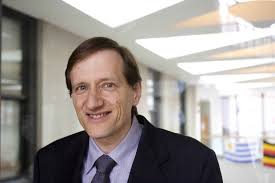
 Reverse-Engineering Censorship in China, with Prof. Gary King - A Special Event with the GSAS
Prof. King offers the first large scale, multiple source analysis of the outcome of what may be the most extensive effort to selectively censor human expression ever implemented. He is the Albert J. Weatherhead III University Professor at Harvard.
Professor King will speak about his recently published research on censorship in China. In his words,
We offer the first large scale, multiple source analysis of the outcome of what may be the most extensive effort to selectively censor human expression ever implemented. To do this, we have devised a system to locate, download, and analyze the content of millions of social media posts originating from nearly 1,400 different social media services all over China before the Chinese government is able to find, evaluate, and censor (i.e., remove from the Internet) the large subset they deem objectionable. Using modern computer-assisted text analytic methods that we adapt to and validate in the Chinese language, we compare the substantive content of posts censored to those not censored over time in each of 85 topic areas. Contrary to previous understandings, posts with negative, even vitriolic, criticism of the state, its leaders, and its policies are not more likely to be censored. Instead, we show that the censorship program is aimed at curtailing collective action by silencing comments that represent, reinforce, or spur social mobilization, regardless of content. Censorship is oriented toward attempting to forestall collective activities that are occurring now or may occur in the future -- and, as such, seem to clearly expose government intent.
The research paper is available here: http://gking.harvard.edu/files/gking/files/experiment_0.pdf
An article about this research appeared in Science Magazine: http://news.sciencemag.org/asiapacific/2014/08/study-internet-censorship-reveals-deepest-fears-chinas-government
Professor King develops and applies empirical methods in many areas of social science research, focusing on innovations that span the range from statistical theory to practical application. King has been elected Fellow in 6 honorary societies and received many prestigious fellowships and awards. His more than 150 journal articles, 20 open source software packages, and 8 books span most aspects of political methodology, many fields of political science, and several other scholarly disciplines.
His work is widely read across scholarly fields and beyond academia. He was listed as the most cited political scientist of his cohort; among the group of "political scientists who have made the most important theoretical contributions" to the discipline "from its beginnings in the late-19th century to the present"; and on ISI's list of the most highly cited researchers across the social sciences. His work on legislative redistricting has been used in most American states by legislators, judges, lawyers, political parties, minority groups, and private citizens, as well as the U.S. Supreme Court. His work on inferring individual behavior from aggregate data has been used in as many states by these groups, and in many other practical contexts. His contribution to methods for achieving cross-cultural comparability in survey research have been used in surveys in over eighty countries by researchers, governments, and private concerns. King led an evaluation of the Mexican universal health insurance program, which includes the largest randomized health policy experiment to date. The statistical methods and software he developed are used extensively in academia, government, consulting, and private industry. He is a founder, and an inventor of the original technology for, Learning Catalytics (acquired by Pearson) and Crimson Hexagon, among others. More information about Gary King and his work available at http://gking.harvard.edu
Professor King will be joined by Xiao-Li Meng, Dean of the Graduate School of Arts and Sciences and Whipple V. N. Jones Professor of and former Chair of Statistics at Harvard, who is well known for his depth and breadth in research, his innovation and passion in pedagogy, and his vision and effectiveness in administration, as well as for his engaging and entertaining style as a speaker and writer. Meng has received numerous awards and honors for the more than 120 publications he has authored in at least a dozen theoretical and methodological areas, as well as in areas of pedagogy and professional development; he has delivered more than 400 research presentations and public speeches on these topics, and he is the author of “The XL-Files," a regularly appearing column in the IMS (Institute of Mathematical Statistics) Bulletin.
Don't miss this special gathering!
Our evening will begin with an open bar of wines and beers and a special dinner prepared by Chef Chris:
MENU:
Menu
Mixed baby greens with walnut vinaigrette
Rosemary Chicken Breast with orange cranberry relish
Pan roast salmon filets topped with leek and oyster mushroom ragout
Vegan option: Baked Stuffed Zucchini
Roasted Rood Vegetables (to include Sweet potatoes, Red potatoes and parsnips)
Brussels sprouts with slivered almonds and dried Apricots
fresh fruit and assorted mini cheese cakes
Date: Friday, December 5, 2014
Time: 6:30-8:30 p.m.
Location: Fulbright Room, Hogan Lovells, 555 13th Street, NW, Washington, DC
$35 members of the Harvard Club of Washington DC and all GSAS alumni/ae
$65 non-members who are not GSAS alumni/ae
Click here to buy tickets!!!